
Powered by a 9.2 per cent growth in the manufacturing sector, India's economic growth stood at 6.9 per cent for 2004-05 fiscal compared to 8.5 per cent during the previous financial year.
India's industrial output rose 5.8 per cent in the year to March 2003 boosted by a robust manufacturing sector despite fears the country's worst drought in 15 years would hurt demand in Asia's third-largest economy.
Dismissing the CSO (Central Statistical Organisation) projection of 4.4 per cent GDP growth this fiscal, Planning Commission member N K Singh said the economy will grow by six per cent this year.\n\n\n\n
Indian industrial output jumped 5.0 per cent in December as robust domestic demand bolstered the manufacturing sector, official data released on Tuesday showed.
In spite of a zero growth in agriculture sector, the Indian economy grew at an impressive 5.8 per cent in the second quarter of 2002-03 compared to 5.3 per cent in the same period last year.
India's gross domestic product grew by 7.4 per cent in the first three months (Apr-Jun) of this fiscal mainly due to a robust manufacturing sector which clocked 8 per cent growth.
Indian industrial growth shot up to 7.4 per cent during February of last fiscal year, giving a further boost to government's 'India Shining' campaign ahead of the Lok Sabha polls.
India's industrial production rose 4.9 per cent year-on-year in April, the first month of the current financial year, the official Central Statistical Organisation said on Thursday.
In consonance with the projected fall in GDP growth to 4.4 per cent during 2002-03, the national income and the per capita income are also estimated to fall to 4.2 per cent and 2.4 per cent respectively during the current fiscal.
India has revised its gross domestic product growth estimate for 2001-02 to 5.6 per cent from an earlier estimate of 5.4 per cent.\n\n\n\n
The quick estimate of Central Statistical Organisation released in New Delhi on Tuesday said the revision was necessary due to the change in base year to 1999-2000 from 1993-94.
India's per capita income rose by 5.2 per cent to Rs 12,416 (about $285) during 2004-05.
India's economic growth slipped to 6.2 per cent in the third quarter of 2004-05 from 11 per cent in the year-ago period.
An average Indian will see only 5.2 per cent rise in income at Rs 12,414 though the economy is expected to log 6.9 per cent growth this fiscal.
The government on Monday revised the economic growth to 8.5 per cent for 2003-04 from 8.2 per cent estimated earlier, mainly due to a bumper agricultural growth of 9.6 per cent.
The industrial growth was pegged at 6.9 per cent during 2003-04 as against 5.7 per cent in 2002-03, according to estimates released by the Central Statistical Organisation.
Aided by a turnaround of the agriculture sector, the country's GDP growth shot up to 10.4 per cent during the third quarter of the current financial year as against 8.4 per cent growth registered during the second quarter of 2003-04.
The economy is poised to grow by 8.1 per cent this fiscal powered by a 9.1 per cent rise in farm output, according to the advanced estimates of Central Statistical Organisation.

'For the first time in this country, perhaps the first time anywhere, we are going to use backwardness index.' 'It is a fundamental shift in the discourse in the country's social justice.'

On his 200th birth anniversary, Utkarsh Mishra traces the life, thought, and legacy of Dadabhai Naoroji, the Grand Old Man of India.

Palak and Anuja endear us to their bittersweet world, observes Sukanya Verma.

The government's initiative to migrate SEZ data from NSDL software to ICEGATE system for streamlined reporting of import data caused double counting of gold imports, resulting in inflated figures and the issue has now been largely rectified, government sources said. The downward revision has provided the actual picture of trade deficit (difference between imports and exports), which was earlier looking very high. The deficit for November will now be revised downwards from $37.84 billion to about $32.8 billion. Similarly, there will be a revision in overall import numbers as well.

While data can empower communities, it reinforces identities, making local politics more caste-centric, with decisions increasingly contested on the grounds of representation.
Such dynamics could lead to shifting alliances and, in the worst case, local governance getting paralysed as each group demands proportional power-sharing, explain Amitabh Kundu and Mehebub Rahaman.

'Mamata needs to address the anger and resentment among various sections of the Hindu community because low-scale communal violence has always paid richer electoral dividends for the BJP.'
rediffGURU Aasif Ahmed Khan counsels students on the best career options in tech and engineering.

India's growth rate is not UPA/NDA issue, Arun Jaitley said.

India's economic growth rate in the January-March quarter is likely to slip to 7.2 per cent q-o-q.

'The Indian private sector knows how to build and run educational organisations, what is needed is a large dose of removal of restrictions.' 'Government restrictions hold back universities in India from launching medical schools,' argue Ajay Shah and Vijay Kelkar.

Changes the base year and included more sectors.

The National Pension System (NPS) added 21.5 per cent fewer fresh subscribers under the corporate segment in 2023 compared to the preceding year. Government officials and experts attribute it to the higher exemption limit of income tax of Rs 7 lakh announced in the FY24 Budget that no more requires employees under this income bracket to opt for NPS for tax-saving purposes. Data collated from the Ministry of Statistics and Programme Implementation (MoSPI) reveals that the corporate component is voluntary in nature and saw 158,212 new subscribers in 2023 compared to 201,517 during 2022.

Meanwhile, IIP for June was revised upwards to a decline of 1.78 per cent from a provisional 2.2 per cent dip in production. It contracted by 2.8 per cent in May this year.

The government hopes of registering GDP growth rate ranging between 6.1-6.7 per cent in 2013-14.

He cautioned however that these are the early signs and one should not start celebrating.

The most serious recommendations to change the financial year came in the years preceded by deficient rainfall. The Jha committee was formed after droughts in 1979-80 and 1982-83, reports Rishika Pardikar/IndiaSpend.
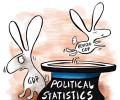
The GDP growth is estimated to come at the "deceptively high" level of 20 per cent for the April-June 2021 quarter but is far below the same in the pre-COVID times, rating agency Icra said on Wednesday. Icra said the low base of the last year, when the GDP had contracted by close to 24 per cent, "conceals" the impact of the second wave of COVID-19 infections. Economic activity is boosted by robust government capital expenditure, merchandise exports and demand from the farm sector, it said, estimating the GDP to grow by 20 per cent and the gross value added (GVA) will register a growth of 17 per cent for the June quarter.
